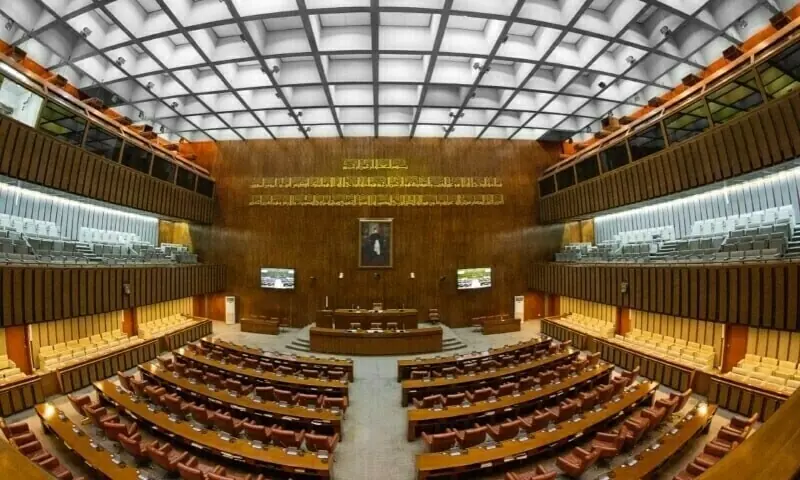
ISLAMABAD: The 27th Constitutional Amendment Bill was officially tabled in the Senate on Saturday for detailed consideration. The session began at 1:10 p.m. under the chairmanship of Syed Yousaf Raza Gilani. Federal Minister for Law and Justice Azam Nazeer Tarar presented the bill in the upper house. Chairman Senate Gilani referred it to a joint parliamentary committee for thorough review and discussion before the final vote.
According to sources, the committee will examine the proposed amendment in detail and present its findings to the Senate on November 10. After that, the bill is expected to reach the National Assembly on November 14 for debate and approval. To pass the amendment, the government will need support from at least 224 members in the National Assembly. This process marks a crucial phase in shaping the country’s constitutional and institutional reforms.
Earlier, the federal cabinet had approved the 27th Amendment during a brief session held in Islamabad. The meeting was chaired by Prime Minister Shehbaz Sharif through a video link from Baku, Azerbaijan. Chief of the Army Staff, Field Marshal Syed Asim Munir, also attended the session. Attorney General Mansoor Usman Awan briefed the cabinet on key features of the proposed amendment, while members reviewed the Pakistan Peoples Party’s recommendations before giving final approval.
One major feature of the 27th Amendment is the creation of a new military position — the Commander of Defence Forces. This post, proposed under changes to Article 243, aims to improve coordination among Pakistan’s three armed forces. It would also help strengthen unified command structures for better national defence management. The move is seen as part of the government’s effort to enhance institutional clarity and efficiency.
Another significant proposal in the bill is the formation of a new Constitutional Court. According to official sources, the court will initially have seven judges with a retirement age of 68 years. Five of these judges will be selected from the current Supreme Court, while the rest may come from High Courts. The new court will handle constitutional matters and interpretation, aiming to ensure faster and more specialized judicial review in sensitive national cases.